Do Dioramas Fit All Diecast Brands? Scale Guide
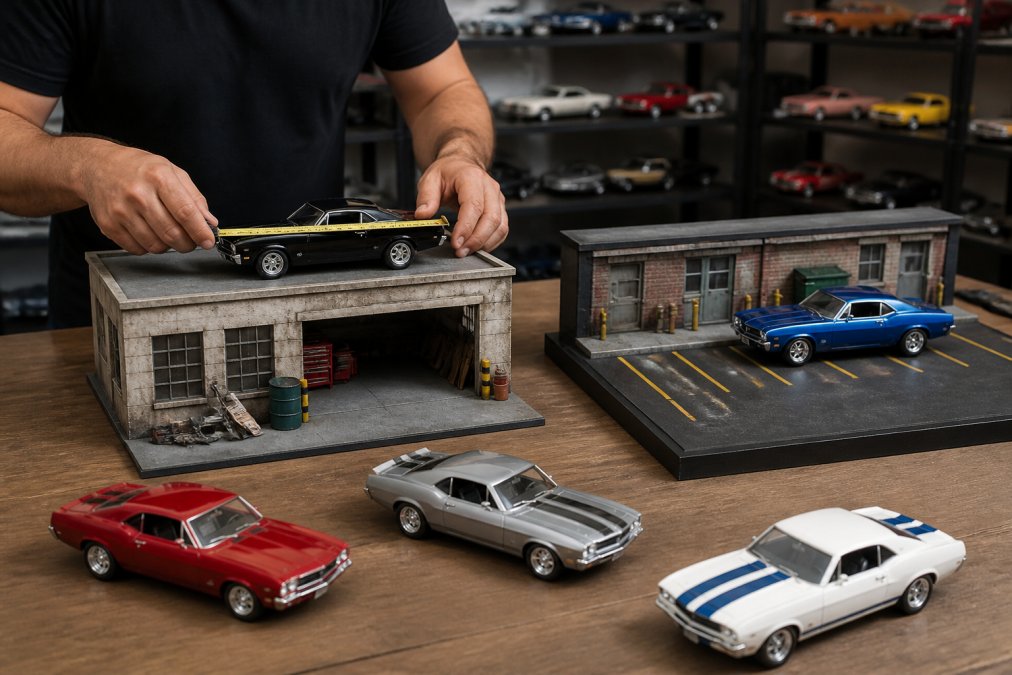
Table of Contents
- Why Scale Matters More Than Brand in Diecast Fitment
- The Diecast Scale Compatibility Guide: 1:18, 1:24, and 1:64
- Why Wheelbase and Track Width Variance Affects Fit
- Mixing Diecast Brands in One Diorama: What Works
- Best Display Cases for 1:18 Cars: Universal Options
- DIY Modifications for Non-Standard Models
- Diorama Lighting and Display Cabinet Considerations
- Conclusion: Build a Display That Adapts to Your Collection
- Frequently Asked Questions
Last Updated: September 7, 2026
Why Scale Matters More Than Brand in Diecast Fitment
The short answer to whether dioramas fit all diecast brands is yes, but only when the scale matches. Scale compatibility overrides brand differences entirely. At YCID Diecast and Dioramas, we build display environments across 1:18, 1:24, and 1:64 scales, and the most common fitment issue we see is collectors trying to mix scales within a single scene. Below, we'll break down how scale compatibility works, where it breaks down, and how to build a display that adapts to a mixed-brand collection.
The Diecast Scale Compatibility Guide: 1:18, 1:24, and 1:64
Understanding Scale Measurements
Scale is a ratio defining how many times smaller a model is than the real vehicle. A 1:18 model is roughly 9 to 11 inches long, a 1:24 measures around 7 to 8 inches, and a 1:64 is about 2.5 to 3 inches. These dimensions are standardized across the industry, so a diorama labeled 1:18 is calculated for models within that size range, not for a specific brand. The caveat is that proportions vary slightly between brands even at the same scale.
Why Wheelbase and Track Width Variance Affects Fit
A common mistake is assuming identical scale guarantees a perfect fit. Wheelbase and track width can vary by several millimeters between brands, even when both are labeled 1:18, due to how each manufacturer measures the source vehicle. Measure your models before committing to a layout to prevent a model that technically fits but visually crowds its environment. Most premium dioramas account for this variance with slightly oversized bays and flexible base layouts.
Mixing Diecast Brands in One Diorama: What Works
Mixing brands in a single diorama works well when every model matches the scale and the scene is designed around universal fitment. This is where the do dioramas fit all diecast brands question gets its real answer: yes, provided you choose a diorama built to generic dimensions rather than one molded to a single vehicle. A universal display uses generous interior space, so 1:18 muscle cars from several manufacturers can sit side by side without rubbing fenders. What does not work is mixing scales within one scene, as a 1:18 car next to a 1:24 car breaks the illusion of realism. Keep one scale per diorama to retain the flexibility to rotate models as your collection grows.
The Universal Adapter/Base System Approach
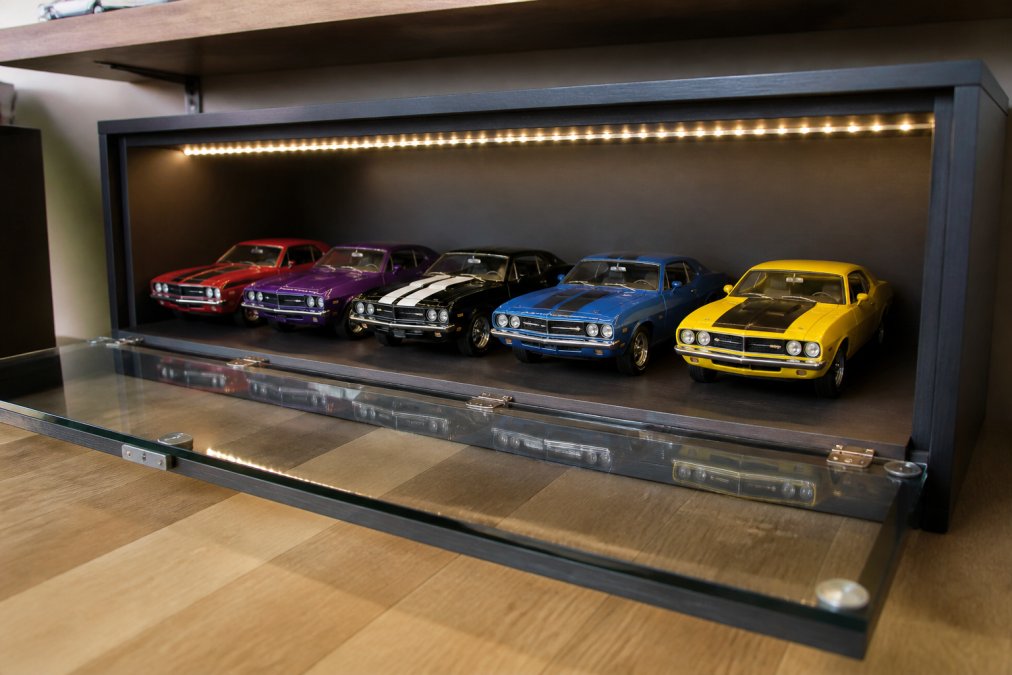
A more advanced solution is the universal adapter/base system. Instead of a single, fixed base plate, these systems use a modular platform with a grid of pre-drilled holes or slotted channels. Each model is mounted on an individual adapter plate that locks into the grid, accommodating wheelbase and track width variance by allowing you to position each plate at the exact spacing required. It also allows easy rotation: swap out one model for another by lifting the adapter plate out of the grid slot.
When evaluating a universal base system, look for three features. First, a grid tolerance that matches the scale: for 1:18 scale, the grid holes should be spaced at 0.5-inch intervals; for 1:64 scale, closer to 0.25 inches. Second, a locking mechanism that holds the adapter plate flush to the base. Simple friction-fit plates can shift when you slide the diorama's front panel open; a positive lock, such as a small tab that snaps into the grid, prevents this. Third, the material of the base itself. A high-density fiberboard base can warp over time if exposed to humidity; a base made from ABS plastic or acrylic is more stable and resists flexing.
For collectors who own a fixed-base diorama, a retrofit adapter kit is a cost-effective alternative. These kits include a self-adhesive grid sheet applied to the existing base plate, along with universal mounting clips that attach to the model's chassis rails. Most 1:18 and 1:24 models have exposed chassis rails running the full length of the car, making them a reliable attachment point. The clips are adjustable in width, gripping a narrow rail on a European model or a wider rail on an American muscle car, turning a brand-specific diorama into a universal one.
Practical Fitment: Wheelbase and Track Width Variance
For collectors concerned about whether their existing models will work, universal displays solve the compatibility problem directly. Products like the YCID Universal 3 Level Dealership hold three to four models per floor with ceiling lights and a slide-out front panel, making it easy to swap cars without disturbing the scene. The 1:18 version measures 20 x 13 x 20 inches, giving each model enough clearance for wheelbase variance across brands. Similarly, the YCID 1/18 Universal 2 Car Garage offers opening windows and a front slide panel, designed for any standard 1:18 casting. These options let you build a display that adapts to your collection rather than forcing your collection to fit a single brand's dimensions.

Best Display Cases for 1:18 Cars: Universal Options
The best display cases for 1:18 cars are designed around universal dimensions rather than a single manufacturer's castings. They should provide at least 11 inches of interior length and 5 inches of height, with a clear front panel that slides open for easy rotation. At YCID Diecast and Dioramas, we offer the 1/18 scale Crankys Speed Shop at $114.95, a two-piece diorama with a slide-out front panel and a separate four-stall parking lot, built to accept any standard 1:18 diecast. Prioritize interior clearance and access over brand-specific detailing.

DIY Modifications for Non-Standard Models
When a model falls outside standard dimensions, simple DIY modifications bring it into fitment range without damaging the casting. The most common adjustments involve raising the base plate, widening parking stalls, or trimming scenery that encroaches on the model's footprint. For models with a slightly longer wheelbase, removing a thin strip from the back wall of a diorama creates the needed clearance. For narrower track widths, adding a thin styrene shim under the tires raises the model so it sits visually correct beside curbs. These modifications require basic tools: a hobby knife, fine sandpaper, and plastic cement. The key is to modify the diorama, never the model, since altering a collectible casting destroys its value. Before cutting anything, dry-fit the model in the diorama and mark the interference points with a pencil. Most universal dioramas are built with removable walls precisely so collectors can make these adjustments. If you are not comfortable with modifications, choose a diorama with generous clearance from the start. The YCID 1/64 Crankys Speed Shop at $22.95 is a good entry point for smaller scales, with a slide-open front panel that simplifies access for adjustments.
Diorama Lighting and Display Cabinet Considerations
Lighting compatibility is a factor most collectors overlook until a model's paint looks wrong under the wrong bulb temperature. The do dioramas fit all diecast brands question extends to lighting: a display environment must illuminate models evenly regardless of the brand's paint finish. Warm white LED lighting in the 2700K to 3000K range renders reds and oranges accurately; cool white lighting above 5000K washes out metallic finishes. When selecting a diorama, check whether lighting is integrated or requires separate installation, and ensure cabinet shelves have adequate vertical clearance for both the model and any base plate.
Lighting Compatibility Across Scales and Brands
The technical challenge of lighting a mixed-brand diorama is about light distribution and shadow control. Different brands use different paint chemistries and clear coat thicknesses, affecting light reflection. A model with a heavy clear coat, common on premium brands like Autoart or Kyosho, will produce a deeper reflection than a thinner coat from a budget brand like Maisto. A single point light source will create a hot spot on the glossier model while the flatter model appears dull. Use diffused, multi-point lighting at different angles to spread illumination evenly.
For 1:18 scale dioramas, the optimal arrangement is a pair of LED strips along the front and back edges of the ceiling, angled inward at about 30 degrees, creating a cross-lighting effect without harsh shadows. For 1:64 scale, a single overhead strip is usually sufficient, placed at least 6 inches above the base plate to avoid a narrow cone of light.
LED Strip Selection and Installation
When retrofitting with LED lighting, the strip's density and color rendering index (CRI) matter more than raw brightness. A 30-LED-per-meter strip is adequate for most 1:64 dioramas, but 1:18 and 1:24 scales require a 60-LED-per-meter strip to avoid visible dark bands. A CRI of 90 or above renders colors accurately, while a CRI of 80 may shift them. Look for high-CRI or full-spectrum strips from suppliers like Waveform Lighting or Super Bright LEDs.
Installation requires attention to heat management. LED strips generate enough heat to soften adhesive backing if enclosed in a sealed diorama. Use a strip with 3M VHB adhesive, rated for continuous use up to 150 degrees Fahrenheit, and ensure a small vent hole near the top of the back wall. For a cleaner installation, use an aluminum channel with a diffuser lens, which acts as a heat sink and spreads light evenly. Mount the channel with small screws rather than adhesive.
Display Cabinet Integration
The interaction between a diorama and its display cabinet is a separate fitment issue. The combined height of the diorama base, the model, and any ceiling-mounted lighting can exceed the cabinet's interior clearance. Standard IKEA cabinets like the Detolf have an interior height of approximately 24.8 inches per shelf. For 1:18 scale, plan for a minimum of 8 inches of vertical clearance per shelf to accommodate the tallest models, such as a 1970 Plymouth Superbird with its rear wing, which stands about 4.5 inches tall in scale.
Depth is another constraint. A 1:18 diorama with a printed backdrop and a front slide panel needs at least 14 inches of interior depth to allow the panel to slide open fully. A practical workaround is a pull-out shelf. For 1:64 collections, the issue is less about height and more about depth: a diorama with a parking lot extension can be 12 inches deep, but the printed front edge can be obscured by the cabinet's frame. Use a spacer block at the rear of the shelf to push the diorama forward.
For a seamless look, consider a cabinet with adjustable glass shelves, such as IKEA's Milsbo line, to match the diorama's exact footprint. Always measure the diorama's full exterior dimensions, including protruding light fixtures, power cords, or slide-panel handles. Measure twice, and leave at least 0.5 inches of clearance on all sides for air circulation and access.
Conclusion: Build a Display That Adapts to Your Collection
The answer to whether dioramas fit all diecast brands is a qualified yes. Scale determines fitment, and within a single scale, universal dioramas accommodate models across manufacturers with only minor variance in wheelbase and track width. The strategy that works for a mixed collection is to invest in displays built around generic dimensions rather than brand-specific castings. At YCID Diecast and Dioramas, we build 1:18, 1:24, and 1:64 dioramas with slide-out front panels, integrated lighting, and generous interior clearance so your collection can grow and change without forcing you to rebuy your display environment.
Frequently Asked Questions
Can I mix different diecast brands in the same diorama display?
Yes, you can mix brands as long as they share the same scale. A 1:18 scale diecast from one manufacturer will generally fit in a 1:18 diorama built by another. The key variable is physical size, not brand. Minor differences in wheelbase or track width exist between brands, but standard dioramas with open floor plans accommodate most 1:18 models without issue.
Does scale consistency matter more than brand when choosing a diorama?
Scale consistency matters far more than brand. A diorama built for 1:18 scale models will not properly fit a 1:24 or 1:64 model, regardless of the manufacturer. Always match the diorama's stated scale to your diecast collection's scale first. Brand-specific styling differences are secondary to the physical fitment that scale determines.
How do I determine if a 1:18 diorama will fit my specific model?
Check the diorama's listed interior dimensions against your model's length, width, and height. Most 1:18 dioramas offer generous floor space, but some larger models like modern trucks may be longer than standard muscle cars. Measure your model from bumper to bumper and compare it to the diorama's floor dimensions before purchasing.
Why do some diecast brands vary in size despite being the same scale?
Diecast brands calculate scale from the real vehicle's published dimensions, so a 1:18 scale model of a large car will be physically longer than a 1:18 model of a compact car. Additionally, some manufacturers round measurements or add slight tolerances during production. These variations rarely exceed a few millimeters and typically do not affect diorama fitment.
Building a display that adapts to a mixed-brand collection starts with choosing the right scale and a diorama built for universal fitment. Our precision-crafted dioramas in 1:18, 1:24, and 1:64 scales come with slide-out panels, ceiling lights, and free US shipping on in-stock orders over $300. Get started with YCID Diecast and Dioramas and give your collection the showcase it deserves.