Are 1:18 Scale Muscle Cars Good Investments? A 2026 Guide
Table of Contents
- The Investment Case for 1:18 Scale Muscle Cars
- 7 Factors That Drive Appreciation in Diecast Value
- Identifying Limited Edition Diecast Models Before You Buy
- Best Diecast Brands for Investment: What to Look For
- Maintaining Diecast Model Condition for Long-Term Value
- Risks, Volatility, and Your Exit Strategy
- Frequently Asked Questions
Last Updated: September 11, 2026
The Investment Case for 1:18 Scale Muscle Cars
Ask ten collectors whether 1:18 scale muscle cars are good investments and you'll get ten different answers, usually delivered with strong opinions. The honest answer sits between the extremes: these models can hold and grow value, but only when you buy the right ones, keep them in the right condition, and know how you'll eventually sell. This guide from YCID Diecast and Dioramas breaks down what actually drives appreciation, where the risks hide, and how to protect your money.

A 1:18 scale muscle car is a diecast replica built at one-eighteenth the size of the original vehicle, typically measuring around 10 to 11 inches long and featuring opening doors, hoods, and trunks. The category covers everything from mass-produced shelf models to limited-run pieces with certificates of authenticity.
Most buyers lose money for one reason: they treat every diecast as an appreciating asset. It isn't. The secondary market rewards scarcity, condition, and documentation, and it punishes everything else.
Why Collectors Treat These Models as an Asset Class
A subset of collectors now buys 1:18 scale muscle cars the way others buy watches or coins. The logic is straightforward: limited production runs create genuine scarcity, and the cars they replicate carry cultural weight that doesn't fade.
The asset-class framing works only for specific pieces. A numbered run of a few hundred models, boxed with paperwork, behaves very differently from a mass-market release sitting on a big-box shelf.
What the Secondary Market Actually Pays
Resale value tracks three things: how few were made, how well the model survived, and whether anyone still wants that particular car. A limited edition diecast in mint condition with original packaging can command multiples of its MSRP years later. The same model with a chipped door and a missing box sells for a fraction of that.
Demand is not uniform. Certain nameplates, colors, and trim levels draw collector demand far beyond others, and that demand can shift as the collector base ages and tastes move.
7 Factors That Drive Appreciation in Diecast Value
Appreciation in diecast value comes from a combination of supply constraints and demand signals. Seven factors do most of the work:
- Production run size. Fewer units made means fewer available later.
- Manufacturer reputation. Brands known for detailing and accuracy hold value better.
- Model subject. Iconic muscle cars outperform obscure variants.
- Color and trim rarity. Unusual factory-correct combinations attract premiums.
- Condition. Flawless paint and straight panels are non-negotiable for top value.
- Original packaging. Box, inserts, and paperwork can add serious money.
- Provenance. Certificates, serial numbers, and documented history reduce buyer doubt.
Notice that only one of those factors is about the car itself. The rest are about scarcity, documentation, and trust. That's the part most buyers miss.

Production Numbers and Rarity
Production numbers are the single strongest predictor of long-term value. A limited edition diecast capped at a few hundred units creates a hard ceiling on supply that no amount of later demand can breach.
That verifiability is what separates a real collectible from a marketing claim.
Condition, Original Packaging, and Provenance
Condition and packaging together often matter more than the model's age. A 20-year-old piece stored properly in its original box can outvalue a newer release that's been handled and displayed in the open.
Provenance adds a third layer. A certificate of authenticity and a documented ownership chain all reduce the risk a buyer takes on. Lower risk means higher prices.
Identifying Limited Edition Diecast Models Before You Buy
Spotting a genuine limited edition diecast model means checking documentation, not marketing language. Look for a numbered certificate of authenticity, a stated production run, and a serial number that matches the model.
A common mistake is trusting the word "limited" on a box. Plenty of mass-produced models use that word loosely. Real limited runs tell you exactly how many were made and give you a way to prove which one you own.
Here's a quick pre-purchase checklist:
- Certificate of authenticity included
- Production run size stated in writing
- Original box and inserts present
- Manufacturer has a track record of honoring stated run sizes
Best Diecast Brands for Investment: What to Look For
Brand reputation is the closest thing this hobby has to a credit rating, and it compounds the same way. A manufacturer that honors stated run sizes, holds tooling accuracy across reissues, and supports its releases with documentation builds a secondary-market premium that survives generational taste shifts. A manufacturer that overproduces, reissues without disclosure, or lets panel gaps drift does the opposite.
When you evaluate a brand, score it on five verifiable traits rather than marketing copy:
- Disclosed production runs. The manufacturer states a number and sticks to it. Reissues are labeled as reissues, not quietly folded into the original run.
- Tooling accuracy. Panel gaps are even, door and hood hinges hold position, and shut lines match the 1:1 car's proportions. Compare against reference photos of the actual vehicle, not the box art.
- Paint and decal quality. Factory-correct colors, no orange peel, and decals that sit flush. On older pieces, check for paint rash along body seams.
- Collector-base trust. Search completed sales, not asking prices. A brand whose models consistently sell, not just list, at a premium has earned its reputation.
A practical way to test a brand before committing capital: buy one mid-priced release, inspect it under raking light, and check whether the certificate serial matches the chassis stamp. If the paperwork and the metal disagree, that brand's documentation is decorative, not evidentiary.
Brand tier matters less than brand consistency. A mid-tier manufacturer with a clean, documented, ten-year track record of honoring run sizes will outperform a premium name that has started quietly reissuing its back catalog. The signal to watch is disclosure behavior, not logo recognition.
completed-sales research on a major collectibles marketplace
Maintaining Diecast Model Condition for Long-Term Value
Maintaining diecast model condition is mostly about controlling three enemies: light, moisture, and handling. UV damage fades paint and decals, humidity accelerates zinc pest and paint rash, and bare hands leave oils that dull finishes over time.
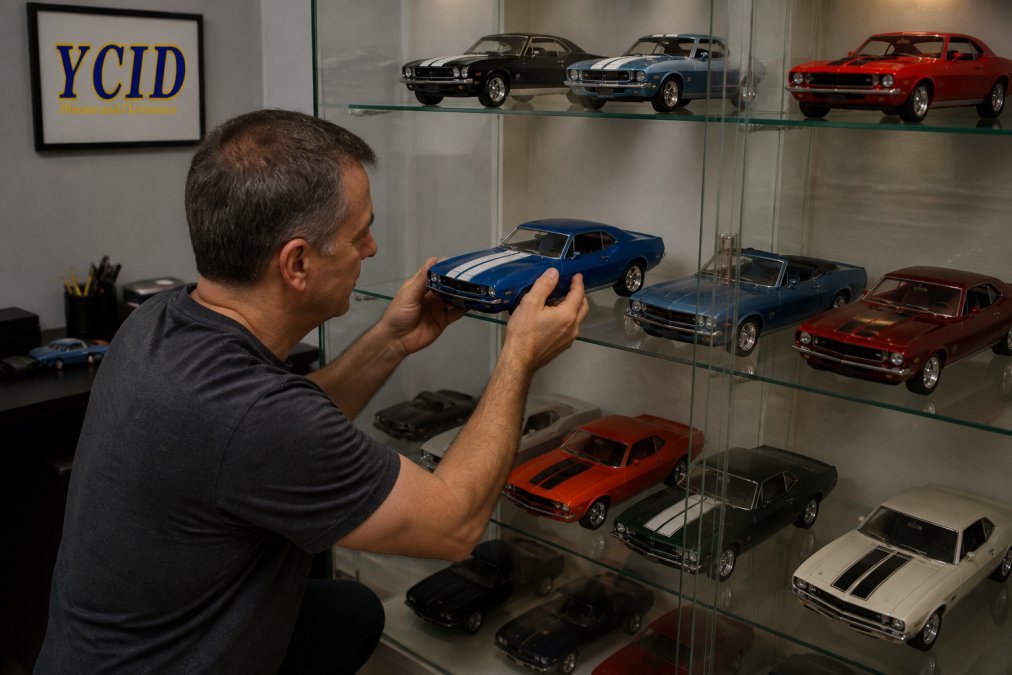
Store models in a display case away from direct sunlight. Keep the room at a stable temperature and moderate humidity. Handle pieces with cotton gloves, and return them to their original packaging if you plan to sell later.
Zinc pest deserves special mention. It's a deterioration of the metal itself, and once it starts, it can't be reversed. Buying from dry, well-kept collections reduces your exposure.
Risks, Volatility, and Your Exit Strategy
Market volatility is real in this hobby. Collector demand shifts with generational taste, and a model that is hot this year can cool quickly. Treating 1:18 scale muscle cars as a guaranteed return is a mistake. The bigger risk is illiquidity: unlike stocks, a diecast model takes time to sell, and the price you get depends heavily on where you list it.
Authentication and Grading Before You Sell
Investment-grade collectibles in other categories, coins, cards, comics, trade on third-party authentication and grading. Diecast has a thinner but growing version of that infrastructure. Before listing a high-value piece, document it the way a grader would:
- Photograph the chassis stamp, tooling numbers, and any manufacturer marks under even lighting.
- Photograph the certificate of authenticity next to the model so the serial numbers are legible in one frame.
- Note any restoration, repaint, or part swap. Undisclosed restoration destroys buyer trust faster than visible wear.
- Keep the original box, inserts, and any factory tissue. Graders and serious buyers weight packaging heavily.
A common pattern is that sellers who present a complete documentation packet, photos, serial match, provenance chain, condition notes, close sales faster and at higher prices than sellers who list a single glamour shot. Authentication is not a formality; it is the mechanism that converts a display piece into a tradable asset.
Insurance and Asset Protection
Insurance for a model collection usually falls under homeowners or renters policies, often as scheduled personal property. Standard policies frequently cap collectibles at a low sublimit, so a collection that has grown valuable enough may need a dedicated rider or a separate collectibles policy.
Document everything: photographs, receipts, certificates, and serial numbers. Insurers ask for proof of value, and collectors who cannot produce it often settle for less than their collection is worth. Update the schedule annually, replacement cost for a discontinued limited run can climb faster than the policy limit you set three years ago.
Tax Treatment When You Sell at a Profit
Collectibles are not treated like ordinary long-term capital gains. Under federal rules, gains on collectibles can be taxed at a higher maximum rate than gains on stocks held the same length of time, and the threshold for that treatment is a well-known public fact worth confirming with a tax professional for your situation. Practical implications:
- Keep purchase receipts and sale records for every piece you intend to flip.
- Track cost basis including shipping, buyer premiums, and any restoration you paid for.
- If you sell through a platform that issues a tax form, reconcile it against your own records.
- State treatment can differ from federal treatment. A qualified tax professional is the right resource, not a forum thread.
Planning Your Exit Before You Buy
Decide how you will sell before you spend a dollar. Will you consign through an auction house, sell directly to other collectors, or list on a marketplace? Each route has different fees, timelines, and buyer pools.
Exit Route |
Speed |
Typical Effort |
Best For |
|---|---|---|---|
Direct to collector |
Moderate |
High |
Rare, high-value pieces with documented provenance |
Auction platform |
Slow |
Low |
Broad buyer reach; best when you can wait for the right bidder |
Marketplace listing |
Variable |
Moderate |
Mid-range models with clear photos and complete packaging |
Consignment dealer |
Moderate |
Low |
Hands-off sellers who accept a fee for reach |
Buyers who plan their exit tend to buy better pieces. They focus on models with documented rarity and clean provenance because they know those are the ones that sell easily later. The exit plan is not a formality at the end of the hobby, it is the discipline that shapes every purchase decision at the start.
Frequently Asked Questions
Will diecast cars go up in value?
Some do, most do not. The 1:18 scale muscle cars that appreciate share specific traits: limited production runs, mint condition, original packaging, and strong collector demand for the specific model. Mass-produced models from big-box retailers rarely gain value. Models with documented low production numbers and certificates of authenticity, like the YCID #42 1972 Cuda limited to 199 coupes, have a clearer path to appreciation than open-run releases.
What factors determine the resale value of diecast cars?
Resale value comes down to five things: production run size, condition, whether original packaging and paperwork are included, the model's popularity among collectors, and current market trends for that scale. A 1:18 scale muscle car with a 199-unit production run, a certificate of authenticity, and no paint rash will outsell the same casting with 5,000 units made and a damaged box every time.
How do I identify rare 1:18 scale muscle cars worth collecting?
Check the production run number first. Manufacturers that publish exact counts, like 199 coupes or 48 convertibles, are giving you the data you need. Look for a serial number or certificate of authenticity in the box. Then verify the model has opening features, accurate detailing, and no known defects like zinc pest or paint rash. Limited edition diecast models from smaller makers often hold value better than mass-produced runs because supply stays constrained.
Are vintage muscle car models a good investment compared to stocks?
They behave differently. Diecast models are illiquid, meaning you cannot sell them in seconds like a stock. Market volatility in collectibles can be extreme, and auction values depend on finding the right buyer. That said, investment-grade models with low production runs have shown steady appreciation over decades. Treat them as a passion asset first, not a replacement for a diversified portfolio.