Most Collectable Muscle Cars: Value & Rarity

Table of Contents
- Defining the Muscle Car Era and What Makes a Car Collectable
- The Impact of Engine Displacement and V8 Performance
- Rare Muscle Car Production Numbers That Drive Value
- One-Year-Only Models and Limited Production Variants
- How to Value Classic Muscle Cars for Investment
- Maintaining Diecast Muscle Car Collections
- Authentication, Provenance, and Market Trends for Younger Collectors
- Conclusion: Building Your Collectable Muscle Car Collection
- Frequently Asked Questions
Last Updated: September 26, 2026
Defining the Muscle Car Era and What Makes a Car Collectable
The most collectable muscle cars are those that combine rarity, historical significance, and authentic performance heritage. The muscle car era (1964-1974) created an automotive culture obsessed with raw power and distinctive design. Collectability today depends on production scarcity, original condition, and historical narrative.
Collectable muscle cars combine limited production numbers, authentic factory specifications, and documented provenance. Collectors pursue them for investment potential, cultural significance, and connection to automotive history.
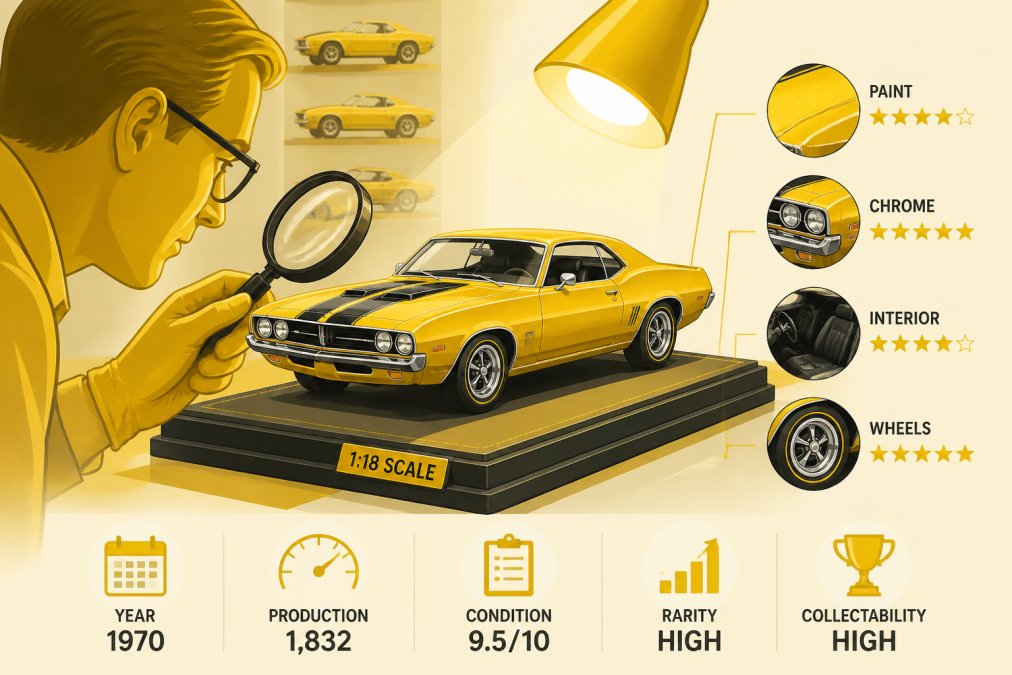
Collectability hinges on specifics: one-year-only models, rare engine options, original paint with matching numbers, and documented limited variants. The market rewards authenticity over restoration and rarity over availability.
For diecast collectors specifically, this same philosophy applies. YCID Diecast and Dioramas produces 1:18 scale replicas that capture these same principles: limited production runs (typically 1-199 pieces), authentic factory details, and documented provenance through certificates of authenticity. The YCID #43 1970 Hemi Cuda in Vitamin C Orange, for example, replicates a barn-find original with shaker hood and matching specifications, limited to just 199 units.

The Impact of Engine Displacement and V8 Performance
Engine displacement remains the defining metric of muscle car collectability. High-displacement V8 engines (427s, 455s, 454s) delivered extreme horsepower and torque that defined the category.
Engine displacement directly correlates with market value. A 1969 ZL1 Camaro with aluminum-block 427 commands significantly more interest than a 350-powered model because fewer came equipped with high-performance engines from the factory.
High-performance packages came as rare factory options through the COPO (Central Office Production Order) system, which allowed dealers to order specific engine and drivetrain combinations unavailable through normal channels. A 1969 COPO Camaro with 427 and 4-speed transmission exemplifies this factory-ordered rarity.

The V8 engine's sound and feel drive collectability culturally. Enthusiasts seek the visceral connection of numbers-matching 440 Six Pack Cudas or 383-powered Dart GSS models. YCID's 1:18 scale replicas capture these details with accurate engine bays and performance specifications.
Displacement separates serious collector cars from entry-level models. A Hemi-powered Cuda commands premium prices over a 340-powered example. Engine displacement should be your first evaluation filter.
Rare Muscle Car Production Numbers That Drive Value
Production volume is the clearest predictor of collectability and market appreciation. A car built in 5,000 units differs fundamentally from one produced in 500 units; scarcity creates demand.
Factory records reveal production numbers for specific engine and transmission combinations. A 1970 Dodge Super Bee with 440 and automatic was common; with 440 and 4-speed manual, significantly rarer. This specificity drives auction prices.
The 1971-1974 period saw declining muscle car output due to insurance costs and regulatory pressure, making survivors increasingly valuable. A 1972 Cuda 340 represents this pivotal transition, making originals more collectible.
Limited production runs create natural scarcity. YCID Diecast and Dioramas mirrors this principle with 1-199 piece runs, creating the same scarcity dynamic as real cars. The YCID #42 1972 Cuda reflects the rarity of the original.
Research factory output and cross-reference specific engine and transmission combinations. Cars with the lowest production figures typically appreciate most significantly.
| Production Era | Typical Annual Output | Collectability Factor | Example |
|---|---|---|---|
| 1964-1968 | 50,000-150,000 units/year | Moderate to High | Early Camaros, Chevelles |
| 1969-1970 | 100,000-200,000 units/year | High | Peak muscle car production |
| 1971-1972 | 50,000-100,000 units/year | Very High | Transition models, rarer options |
| 1973-1974 | 20,000-50,000 units/year | Extremely High | Final muscle car years |
One-Year-Only Models and Limited Production Variants
One-year-only models represent the pinnacle of muscle car collectability. The 1970 Dodge Super Bee exemplifies this, with unique styling and engine options that changed significantly in 1971.
Factory options produced in extremely limited quantities command premium prices. A 1970 Cuda with Hemi or 1969 ZL1 Camaro with aluminum-block 427 were expensive upgrades only serious enthusiasts selected.
The most collectable muscle cars have multiple layers of rarity. A 1968 Dodge Dart GSS (one-year-only) with 383 engine, specific color, and original condition exemplifies this. The YCID #34 Jay Leno 1968 Dodge Dart GSS replicates this specific real car, combining year, model, engine, and color into a unique historical artifact.
Limited production variants within a model year create similar dynamics. A 1970 Cuda convertible with 440 Six Pack was rarer than the coupe version. YCID #46 reflects this hierarchy: standard coupe (199 units), vinyl top (96 units), convertible (60 units).
YCID #43, 1970 Hemi Cuda, Vitamin C →

The collector market recognizes these distinctions immediately. A true one-year-only model appreciates more consistently than a model that was produced across multiple years. If you're building a collection, prioritize models with documented single-year production or extremely rare option combinations.
How to Value Classic Muscle Cars for Investment
Valuing classic muscle cars requires understanding rarity, condition, provenance, and market demand. Knowing how to evaluate potential acquisitions separates savvy collectors from those who overpay.
Documented provenance is critical. A muscle car with clear ownership history, original documentation, and matching numbers commands a significant premium. Original paint, interior, and engine components matter enormously, as reproduction parts and convincing fakes are common.
Condition ranges from concours-level restoration to original, unrestored patina. The market increasingly favors authenticity over perfection.
Research recent auction results across specialized muscle car auctions, general automotive auctions, and private sales. Auction records reveal what collectors actually pay. The YCID #35 1969 COPO Camaro 427 replicates a car featured in HOT ROD magazine; documented history and media coverage drive collectability.
For diecast collectors, limited production numbers, documented authenticity (COA), and condition determine long-term value. Mint condition with original packaging appreciates more reliably than opened models.
Consider these valuation factors in order of importance:
- Rarity (production numbers, one-year-only status, rare option combinations)
- Authenticity (matching numbers, original components, documented provenance)
- Condition (original paint, original interior, mechanical functionality)
- Market demand (cultural significance, recent auction activity, collector interest)
- Provenance (ownership history, celebrity ownership, media coverage)
Maintaining Diecast Muscle Car Collections
Preserving diecast collection value requires controlling temperature, humidity, light exposure, and handling. A well-maintained collection appreciates; a neglected one deteriorates.
Stable temperature (65-75°F) and humidity (30-50%) protect paint and plastic. Extreme heat fades paint and embrittles plastic; excessive humidity promotes corrosion and damages decals.
Direct sunlight accelerates fading. Use UV-protective display cases or position open-shelf models away from windows. YCID Diecast and Dioramas offers precision-crafted display dioramas in 1:18, 1:24, and 1:64 scales to showcase collections while protecting them.
Use cotton gloves to prevent hand oils from damaging paint and chrome. Store models in original packaging when not displayed. Never use compressed air; pressure damages decals and forces moisture into seams.
Dust accumulation is inevitable, but cleaning technique matters. A soft brush or compressed air held at a distance works for general dust removal.
| Maintenance Task | Frequency | Best Practice |
|---|---|---|
| Dust removal | Monthly | Soft brush or compressed air from distance |
| Environmental check | Quarterly | Monitor temperature and humidity levels |
| Display rotation | Annually | Reposition models to even light exposure |
| Storage inspection | Annually | Check packaging integrity and model condition |
Authentication, Provenance, and Market Trends for Younger Collectors
Models with unique color combinations or rare option specifications command premiums compared to standard versions.
Conclusion: Building Your Collectable Muscle Car Collection
The most collectable muscle cars share clear characteristics: rarity, authenticity, and historical significance. Whether you're collecting full-size vehicles or precision-crafted diecast models, these principles guide value appreciation and long-term satisfaction. Start by understanding production numbers, engine specifications, and one-year-only models. Research provenance carefully. Prioritize original condition and documented authenticity.
Frequently Asked Questions
What is the most sought after muscle car for collectors?
The 1970 Dodge Hemi Cuda and 1969 Chevrolet Camaro ZL1 consistently rank among the most sought-after muscle cars due to their rare production numbers, high-performance V8 engines, and iconic status. The Hemi Cuda's 426 cubic inch engine and the Camaro ZL1's aluminum block 427 represent the pinnacle of muscle car engineering. These models command premium auction prices because they embody the muscle car era's peak performance and design. For collectors seeking precision replicas, the YCID #43 1970 Hemi Cuda in Vitamin C Orange ($144.95) captures the essence of this legendary model with numbers-matching accuracy and authentic factory specifications.
What factors make a classic muscle car highly collectable?
Collectability depends on several factors: engine displacement (higher cubic inches and horsepower increase value), production volume (fewer cars made means higher rarity), original condition or restoration quality, matching numbers (engine, transmission, and chassis), and factory options (shaker hoods, special paint codes, performance packages). One-year-only models command premium prices. Provenance and documented history also matter significantly. A car with known ownership and restoration records is more valuable than one with unclear origins. Limited production runs like the YCID models (typically 199 units or fewer) create scarcity that appeals to serious collectors.
Are 1:18 scale diecast models a good alternative to collecting full-size muscle cars?
Yes, 1:18 scale diecast models offer serious collectors an accessible alternative that eliminates storage costs, maintenance expenses, and insurance concerns. High-quality models like YCID's precision-crafted replicas capture authentic details including matching engine displacement, original color codes, and factory specifications. They allow collectors to own replicas of rare, expensive classics without the financial burden of full-size vehicle ownership. For collectors with space constraints or budget considerations, diecast collections provide genuine hobby satisfaction.
How do I know if a muscle car model is actually limited production?
Authentic limited-production claims should include specific production numbers (e.g., 1-199) and come with a certificate of authenticity (COA). Verify the manufacturer's stated limits before purchase. YCID models clearly document production limits on each release, for example, the 1970 Cuda 440 Six Pack is limited to 199 coupes, 96 vinyl top versions, and 60 convertibles. Request numbered documentation and inspect the packaging for production codes. Avoid sellers making vague 'exclusive' claims without concrete numbers. Reputable manufacturers publish release announcements specifying exactly how many units will be produced, which protects collector investment and ensures genuine rarity.