Best Way to Organize a 1:64 Diecast Collection (2026)
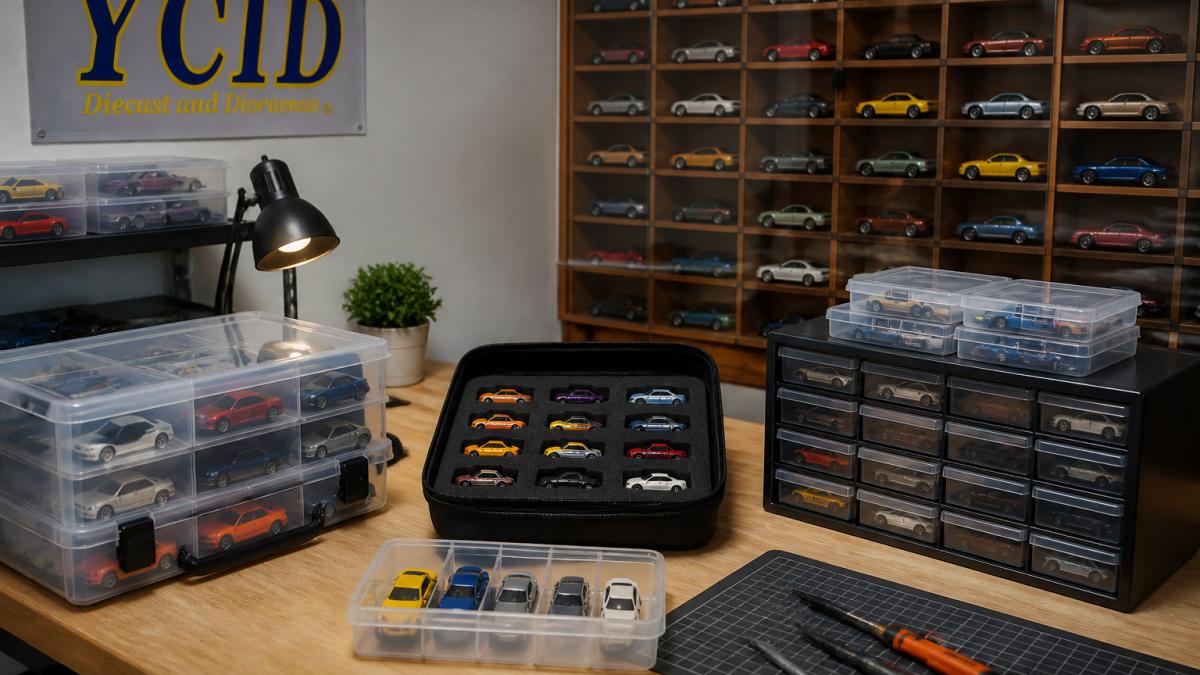
Table of Contents
- Best Way to Organize 1:64 Diecast: Start With a Plan
- Display Cases and Shelving That Show Off Your 1:64s
- Diecast Collection Inventory Software: Track What You Own
- How to Clean 1:64 Diecast Cars Without Damaging Paint
- Categorize by Theme, Era, or Manufacturer
- Dioramas and Lot Pads That Organize and Display at Once
- Common Organization Mistakes to Avoid
- Conclusion: Build a System You Will Actually Maintain
- Frequently Asked Questions
Last Updated: October 2, 2026
Best Way to Organize 1:64 Diecast: Start With a Plan
The best way to organize 1:64 diecast is to decide on your display space, budget, and sorting logic before you buy a single shelf or case.
Here's the core problem: a 1:64 collection grows quietly. You buy three cars at a show, two online, one as a gift.
So the fix isn't a bigger shelf. It's a plan.
Below, we break down display, inventory, cleaning, and sorting into steps you can finish this weekend. The throughline is simple: every choice should make the collection easier to see, easier to find, and easier to maintain.
Display Cases and Shelving That Show Off Your 1:64s
Display cases and shelving are the backbone of any organized 1:64 setup because they set a fixed limit on how many cars are visible at once. That limit is a feature, not a restriction.
Three formats work well for 1:64 scale:
- Wall-mounted acrylic cases with individual compartments. Best for keeping dust off and showing the full row at eye level.
- Glass curios with adjustable shelves. Best when you want to rotate cars in and out by theme.
- Open shelving with a lip or rail. Best for quick access, but expect to dust weekly.
A common mistake is buying a case sized for 1:18 scale and assuming 1:64 cars will look right inside it. They won't.
Match the case to the scale. For 1:64, compartment depth of 5 to 7 centimeters holds most standard castings with room for a small base plate.
Diecast Collection Inventory Software: Track What You Own
Diecast collection inventory software is any tool that lets you log each car's make, model, year, scale, color, and condition in a searchable list.
The reason to track: duplicates and gaps. Without a list, you buy the same casting twice at two different shows and miss the one variation you actually needed.
What to log for each car:
- Manufacturer and casting name
- Year and scale
- Color and any variation code
- Condition (boxed, loose, damaged)
- Where and when you bought it
- What you paid
Add one column that matters more than the rest: location. "Bin 3, top shelf" tells you where the car physically sits.
A simple approach is to photograph each car as you log it and attach the image to the row.
How to Clean 1:64 Diecast Cars Without Damaging Paint
Cleaning 1:64 diecast cars safely means using the gentlest method that removes the dust, and stopping there. Paint on small castings is thin, and decals are thinner. Aggressive rubbing does permanent damage.
Start with a soft makeup brush or a clean, dry paintbrush. Brush along the panel lines, not across the decals. For fingerprints on windows, use a microfiber cloth barely dampened with water, then dry immediately.
What to avoid:
- Paper towels, which scratch clear plastic
- Household glass cleaner, which can cloud windows and lift tampo printing
- Compressed air held close to the surface, which can drive dust into wheel wells and, at high pressure, push loose parts
- Soaking any car in water, which traps moisture in the axles
If a car has been in storage and feels gritty, brush first, then wipe. Never wipe grit across a painted roof.
Categorize by Theme, Era, or Manufacturer
Sorting by theme, era, or manufacturer is the step that decides whether your system survives contact with a growing collection. Pick one primary method and one secondary. Mixing three at once creates confusion.
The three main approaches:
| Sorting Method | Best For | Trade-off |
|---|---|---|
| Theme (muscle, trucks, racing) | Display-focused collectors | Same casting can fit two themes |
| Era (decade or year range) | Historians and completists | Needs a clear cutoff rule |
| Manufacturer | Brand-loyal collectors | Uneven shelf sizes between brands |
Theme works best when your display is the point. Era works best when you're chasing a complete run. Manufacturer works best when you collect one or two brands deeply.
The practical answer for most people: sort by manufacturer on the shelf, then by era within each brand.
Dioramas and Lot Pads That Organize and Display at Once
Dioramas and lot pads organize and display a 1:64 collection at the same time because they give loose cars a designated home instead of a shelf edge. A printed lot pad defines the footprint. A diorama gives the cars a scene.

For 1:64 collectors, YCID Diecast and Dioramas makes several options built for exactly this. The 1/64 Crankys Speed Shop is a plug-and-play PVC and acrylic building with an LED light strip, a sliding front panel for swapping parts and accessories, and a printed parts wall. It arrives assembled, so it works as a display anchor the day it lands.

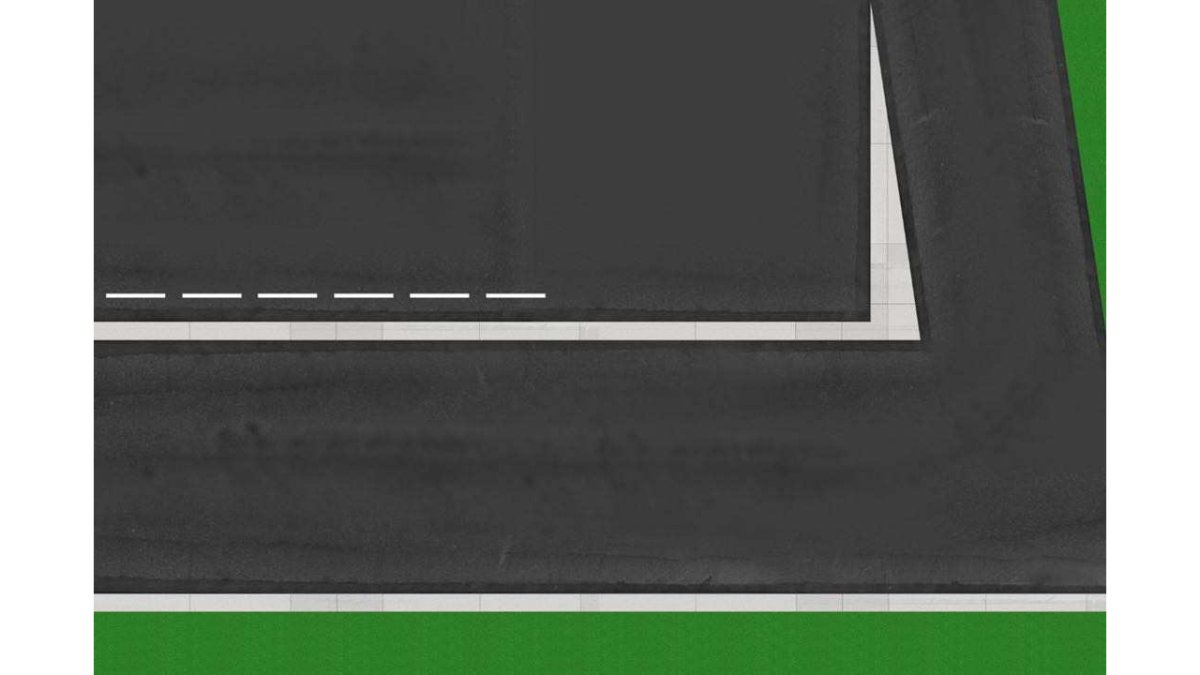
If you want a base that ties a group of cars together, the 1/64 Yenko Dealership Lot Pad is a flat, mouse-pad-material layout measuring 23.5 by 15, with a highlighted area for placing a diorama. The 1/64 Mr Norms Dodge Dealership Lot Pad does the same job with a Grand Spaulding layout, including sidewalks, street, and a used car area with parking curbs.

For collectors who want a full scene, the Mr Norms Grand Spaulding Dodge Showroom Diorama comes in 1:64 at $39.95, with a slide-out front panel and ceiling lights. The Yenko Chevrolet Dealership Diorama is also $39.95 in 1:64 and is plug-and-display at that scale, with a removable roof section for swapping cars.
The Universal 3 Level Dealership takes a different approach: three floors, each holding 3 to 4 models, with a slide-out front panel and ceiling lights. It's available as a $10.00 pre-order deposit in both 1:18 and 1:24.
Common Organization Mistakes to Avoid
The most common organization mistakes all trace back to one habit: buying storage before deciding what the collection is for. Here are the ones we see most.
- Buying cases before counting cars. You either run out of room in a month or buy a case that's half empty.
- Sorting by three methods at once. Pick a primary and a secondary. That's it.
- Skipping the location field in your inventory. A list without locations doesn't help you find anything.
- Cleaning with the wrong cloth. Paper towels and glass cleaner cause more damage than dust ever will.
- Leaving cars loose in boxes. Chipped paint and bent spoilers are almost always a storage problem, not a shipping problem.
- Treating display as a one-time project. A collection that grows needs a system that absorbs new arrivals without a full teardown.
The thing nobody tells you about organizing a 1:64 collection is that the system matters less than the habit. A mediocre system you actually maintain beats a perfect one you abandon.
Conclusion: Build a System You Will Actually Maintain
The hard part of organizing a 1:64 collection isn't the shelving or the spreadsheet. It's building something you'll keep up with after the novelty wears off. That usually means fewer rules, a fixed display limit, and a home for every car.
If you want display pieces that double as organization, YCID Diecast and Dioramas builds 1:64 dioramas and lot pads designed for exactly that. The Crankys Speed Shop arrives assembled and ready to light up. The lot pads give loose cars a defined footprint. And in-stock models ship free on orders over $300.00.
Start with one shelf and one list. Add the scene when you're ready.
Frequently Asked Questions
What is the best way to store 1:64 scale diecast cars?
Store 1:64 diecast cars in a dust-free, climate-controlled space away from direct sunlight. Clear display cases with sliding fronts keep dust off while letting you see the collection. For cars not on display, use acid-free boxes with foam padding to prevent paint scuffs and wheel damage. Avoid attics and garages where temperature swings can warp plastic parts or fade decals over time.
How do you categorize a diecast car collection?
Most collectors categorize by theme, era, manufacturer, or scale. A common approach is to group by automotive theme first, such as American muscle, then by decade or brand. Within each group, arrange by color, model year, or rarity. Whichever system you choose, keep it consistent so you can find any car in seconds and spot gaps in your collection.
Should I keep my 1:64 diecast cars in their original packaging?
It depends on your goal. Original packaging protects value and keeps cars dust-free, especially for limited-run or carded models. If you display your collection, removing cars from packaging lets you enjoy them fully, but store the boxes flat in a labeled bin. Many collectors keep rare pieces boxed and display their favorites loose in cases.
How can I protect my 1:64 diecast collection from dust?
Enclosed display cases with clear acrylic or glass fronts are the most effective dust barrier. For open shelving, add sliding doors or use a soft brush weekly to remove buildup. Dioramas with sealed sides, like a speed shop building, also cut down on dust reaching the cars inside. Keep shelves away from vents and open windows.
Do 1:64 dioramas work with diecast models from other brands?
Yes. Most 1:64 dioramas and lot pads are built to standard 1:64 scale dimensions, so they fit models from a range of manufacturers. A printed dealership lot pad, for example, gives you a flat surface sized for 1:64 cars regardless of brand. Just check the footprint measurements before buying to make sure your models fit the space.